How a Car Is Unlocked Without Damage in Leeds
A car is unlocked without damage by working the door mechanism the way it was built to be worked, rather than forcing any part of it. Nothing is levered, drilled, cut or bent, which is why a professional entry leaves no mark and needs no repair afterwards.
What that does not include is a set of instructions. A method that opens your car opens anybody else parked on the same street, so the technique is not published here and you should be wary of anybody who does publish it. The question worth answering is not how it is done, it is how you know it will be done properly.
That starts before the van arrives, with something almost nobody writes about and every legitimate locksmith insists on.
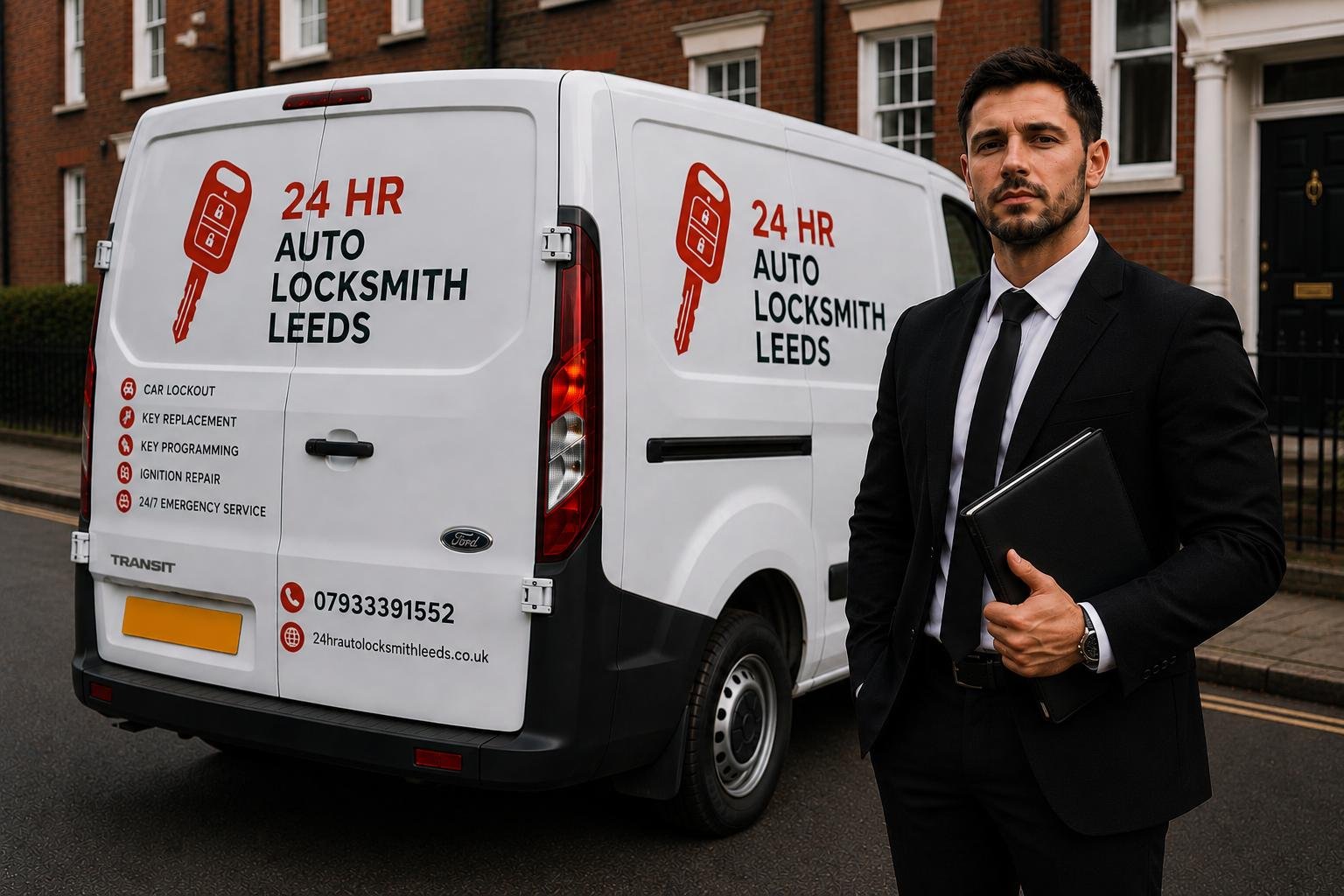
The First Thing Checked Is That the Car Is Yours
Before a single tool comes out of the van, ownership is established. It is the part of this job almost nothing written about vehicle entry mentions, and it is the part that separates a locksmith from somebody stealing a car.
The V5C, an insurance certificate or a rental or lease agreement, checked against identification with a matching name. A photograph on a phone is fine when the paperwork is shut in the car.
What is in the boot, what is hanging from the mirror, what colour is the interior. Straightforward to answer if the car is yours and impossible to guess if it is not.
Because the alternative is a stranger paying somebody to open a car that is not theirs. The check is short and it is not negotiable.
Send them away. A locksmith who will open a car without establishing whose it is will do the same for the next person, and that includes when the next car is yours.
This is worth knowing in advance because it feels like an obstacle when you are already standing in the rain, and it is the opposite. The same check that slows you down by two minutes is the reason nobody can have your car opened while you are at work.
Why Nothing Has to Be Forced
Non destructive entry works because a car door is built to open. The job is persuading a mechanism that is already designed to move, rather than overcoming something built to resist, and that is the whole principle.
A car door is designed to open thousands of times. The work is persuading a mechanism that already wants to move, not defeating something built to resist.
No drilling, no cutting, no levering a door away from its frame and no breaking glass. If any of that happens, something has gone wrong rather than according to plan.
No marks on paint, no disturbed seals, no bent frame and no warning lights afterwards. You should not be able to tell the car was opened by looking at it.
The key that was shut inside still works, the central locking still works and nothing needs replacing. A job that ends with a lock needing repair was not a non destructive entry.
Anything that opens your car opens the next car on the street. The pages and videos setting out exactly how it is done are read by more than just locked out owners, which is why you will not find a technique on this page and why it is fair to be suspicious of the ones that do.
What you can reasonably expect to be told is what will happen to your car, how long it will take and what it will cost, all before anybody starts. That is set out on the emergency lockout service page.
What Actually Causes Damage on a Modern Car
Damage during a lockout almost never comes from the lock. It comes from applying advice written for an older generation of vehicle to a car that is built completely differently.
Many cars disable the interior handles entirely once locked from outside, so reaching an interior control achieves nothing at all. Most published advice predates this.
Side airbags and their wiring sit in the door cavity on a great many modern cars. Anything pushed blindly into that space is being pushed somewhere expensive.
Doors with frameless windows and heavily bonded glass do not tolerate being wedged. What leaves no mark on a car from 2005 can crack a seal or a screen on one from 2020.
The methods circulating online were written for a different generation of car. They are not simply less effective now, on some vehicles they are the cause of the damage.
The pattern is consistent. A method that genuinely was harmless on a car from the nineties meets a door that now contains an airbag, a deadlock and bonded glass, and the result is a repair bill that has nothing to do with being locked out.
The DIY Methods and What They Really Cost
Four outcomes, and the arithmetic is not close. The cheapest thing on this list is the one that involves phoning somebody.
Written for pull up lock buttons that most cars stopped fitting two decades ago. On a modern door they reach nothing and risk the seal on the way in.
A door skin pulled out of alignment does not go back with a push. Body shop work on a single door starts well above the price of the entry that was avoided.
Glass, fitting and a full valet for the fragments, usually with a wait for the right screen. A side window is rarely under three figures and it is almost never claimable.
Entry starts at £65 with no VAT and no call out fee. Almost every DIY attempt that goes wrong costs more than that, and a good share of the ones that go right still take longer.
There is also the part that does not show up on an invoice. A door forced open badly can leave a seal that lets water in months later, or a lock that works today and sticks in January. Those are the expensive ones, because by the time they appear nobody connects them to the afternoon the keys were shut inside.
A fuller comparison of the options and who to ring first sits in locked keys in car, who to call.
When Breaking a Window Is the Right Answer
There is one situation where none of the above applies and waiting is the wrong decision. It is worth being clear about it rather than pretending every lockout can wait thirty minutes.
This is the exception and it is not close. If a child is in a locked car and in distress, get them out and worry about the glass afterwards. Ring 999 first and they will tell you the same.
A car interior climbs far faster than people expect on a warm day. Ring 999 rather than deciding alone, because the police can authorise it and that matters afterwards.
If it comes to it, the one furthest from whoever is inside, and cover them before it goes. Laminated screens do not break the way toughened side glass does.
Shopping, a phone, a work bag or the keys themselves are not emergencies. Thirty minutes and £65 is a better answer than glass for all of them.
For a child or an animal in a locked car, the emergency services should be called first. They can authorise breaking in, they can attend, and having made that call matters a great deal afterwards. A pane of glass is replaceable and the reason for breaking it needs to be on record.
What It Costs and How Long It Takes
Entry starts at £65 with no VAT and no call out fee, and nothing further is charged where no key has to be made. Arrival across the Leeds postcodes runs at about 30 minutes and the entry itself is usually a matter of minutes once the van is there.
Where the keys are genuinely lost rather than shut inside, the job changes. A new key starts at £85 with a working spare present and £145 with every key gone, and the full breakdown sits on the car key replacement cost guide. The price is fixed on the phone from the registration either way, and it does not move on arrival.
Evenings, weekends and bank holidays carry the same figure, which is worth saying because a lockout at eleven at night is exactly when people expect to be charged more.
Questions Before You Call
DBS checked · Fully insured · Proof of ownership checked on every job · No VAT · All Leeds LS postcodes · 07724214298
Locked Out? Do Not Force It.
Opened without a mark from £65, no VAT, about 30 minutes away.
All makes covered. All Leeds LS postcodes. No call-out fee, day or night.